
Does the Government recognise the seriousness of changes in the population structure?
Researchers from the DEMOGRAPHY programme met with civil servants from various ministries to discuss the content, implementation, and information needs of the new Government Programme.
Population development in Finland receives relatively little attention in the programme of Petteri Orpo’s Government. While the programme acknowledges that population ageing challenges the sustainability of society, concrete measures to influence or adapt to the situation remain limited. The planned measures are general in nature and partly inconsistent with one another.
– Does the Government truly recognise how serious a challenge the change in the population structure is for Finnish society? asks Susan Kuivalainen, Director of the Strategic Research Council’s DEMOGRAPHY programme.
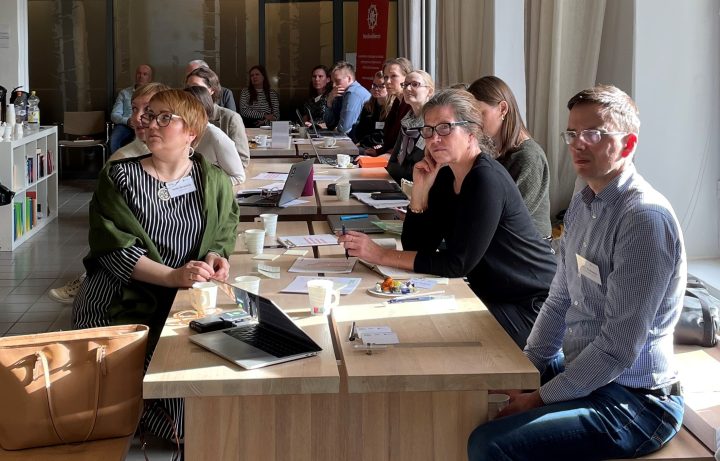
Researchers from the DEMOGRAPHY programme met with civil servants working on demographic issues from different ministries on 25 September in Helsinki. The aim of the meeting was to build a shared understanding of the content of the new Government Programme and the research knowledge needed for its implementation. At the same time, we strengthened dialogue between researchers and the civil service and laid out groundwork for future cooperation.
Demographic issues require a broad-based approach
At the meeting, we discussed, among other things, the demographic policy report mentioned in the Government Programme. The report is intended to address the well-being of families with children, income security, reconciliation of work and family life, and the situation of involuntarily childless people. In addition, the Government will launch a foresight process aimed at forming a vision of the kind of country we want to build for future generations.
Senior Ministerial Adviser Jouni Varanka from the Strategy Department of the Prime Minister’s Office hopes that the demographic policy report will examine population development in a broad manner, not only from the perspective of, for example, family benefits.
– Changes in the population structure, together with the green transition, place significant pressure on public finances. The availability of labour is a major question for the future, and societal discussion on immigration is still ongoing.
During the meeting, representatives from the ministries described how the implementation of the Government Programme is progressing and the role of demographic development in their respective ministries’ work. In small-group discussions, participants examined fertility, the working-age population, immigration, the ageing population, and regional differences in more detail.
The event was attended by researchers from each DEMOGRAPHY programme project, as well as representatives from the Ministry of Education and Culture, the Ministry of the Interior, the Ministry of Social Affairs and Health, the Ministry of Economic Affairs and Employment, the Prime Minister’s Office, the Ministry of Finance, and the Ministry of the Environment.
Finland’s population is ageing, birth rates are declining, and the number of people of working age is decreasing. Demographic development involves fundamental changes that have wide-ranging impacts on our society, economy, and people’s lives. The projects within the DEMOGRAPHY programme study how demographic changes are reshaping Finnish society and how these changes can be influenced and adapted to.