
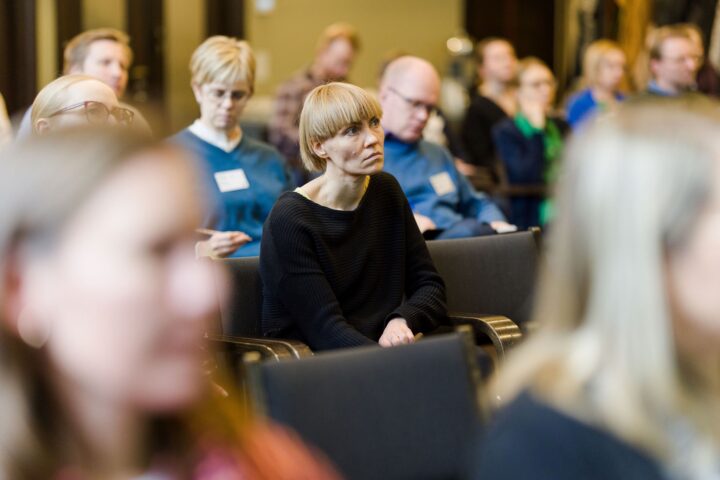
Demographic Change Must Be Addressed and Adapted To
Ensuring the sustainability of society requires long-term and strategic policymaking.
The DEMOGRAPHY programme organised a discussion event for civil servants from the ministries on 18 November. The aim of the meeting was to provide up-to-date research knowledge to support the civil service in its work related to the Government’s mid-term policy review, as well as preparations for upcoming elections and the next government term.
The researchers’ main message to the civil service was clear: changes in the population structure require both active influence and adaptation from society. Finland’s population is ageing rapidly, and the extremely low birth rate is accelerating this development even further. Without immigration, Finland’s population will begin to decline. These changes challenge the social and economic sustainability of society.
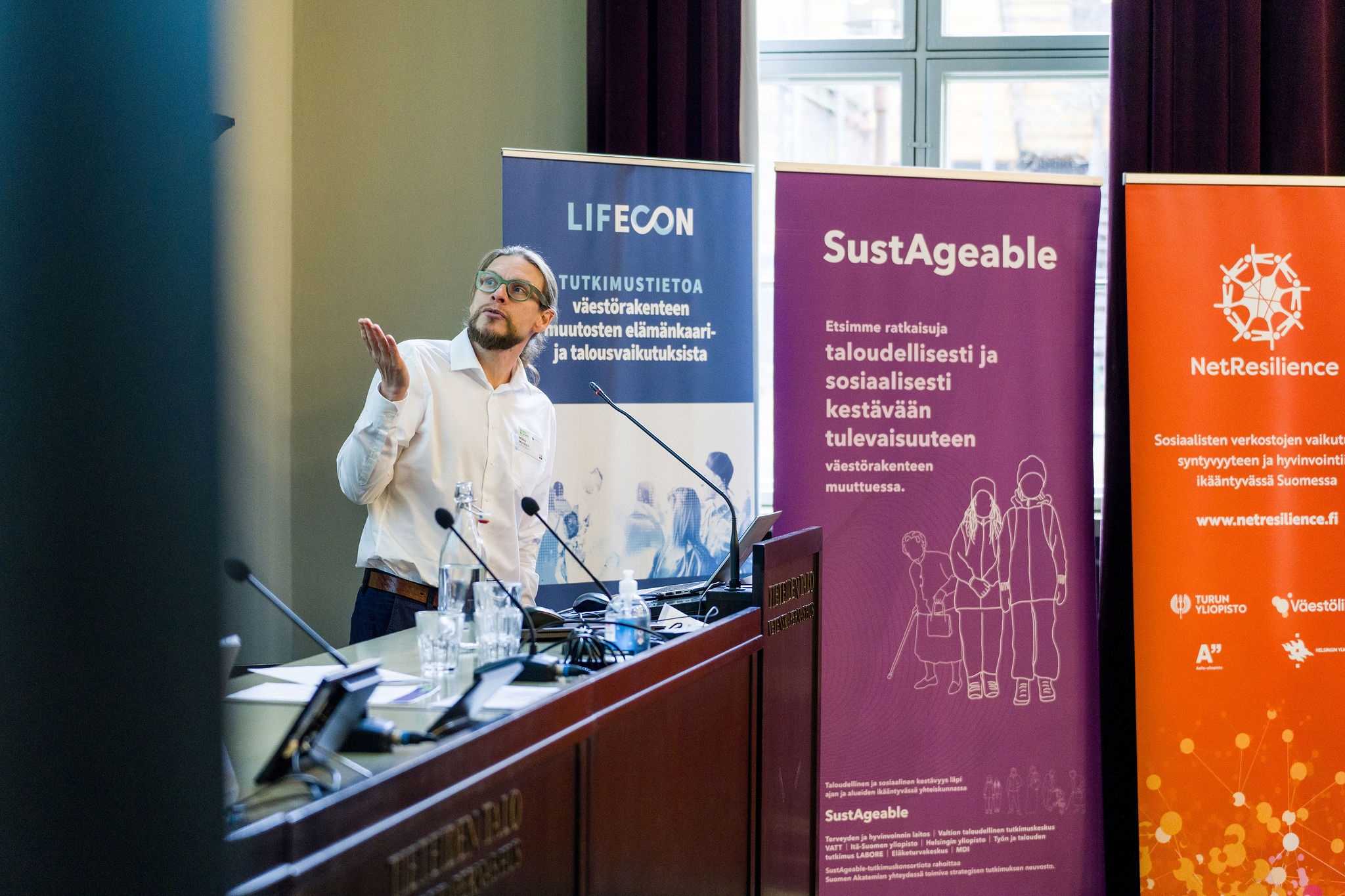 Professor Mikko Myrskylä (FLUX).
Society has many ways to support family formation. These include, for example, promoting education, employment, equality and well-being, strengthening fertility awareness, and investing in the reconciliation of work and family life.
However, it is unrealistic to assume that birth rates could be turned into significant growth. Therefore, population ageing above all requires adaptation from society. Means of adaptation include, for example, raising the level of education, promoting immigration and supporting integration, as well as strengthening labour market participation. In addition, we should support young adults’ entry into working life, adapt the pension system, and shift the focus of the service system towards prevention.
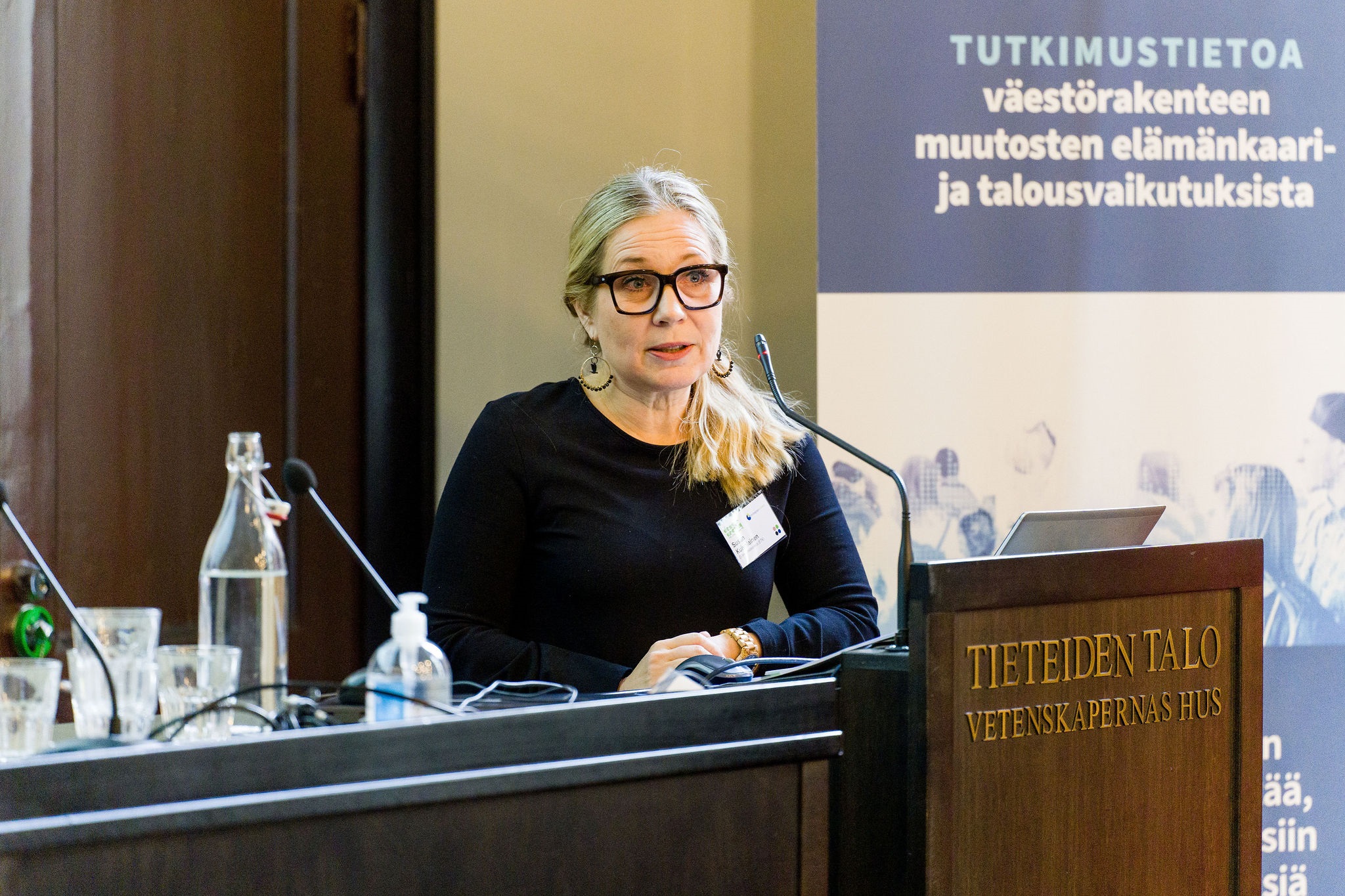 Director of the DEMOGRAPHY programme, Susan Kuivalainen.
The researchers also emphasised that Finland needs better population forecasts in order to prepare for an uncertain future. Statistics Finland or another neutral public actor should have sufficient resources to produce high-quality population forecasts that also take uncertainty into account.
The discussions were deepened in thematic breakout sessions focusing on supporting family formation, employment of immigrants, ageing and health and social services, young adults’ mental health, and adaptation to and influence on demographic change. The event was attended by researchers from each DEMOGRAPHY programme project, as well as representatives from the Ministry of Transport and Communications, the Ministry of Education and Culture, the Ministry of the Interior, the Ministry of Social Affairs and Health, the Ministry of Economic Affairs and Employment, the Prime Minister’s Office, the Ministry of Finance, and the Ministry of the Environment.
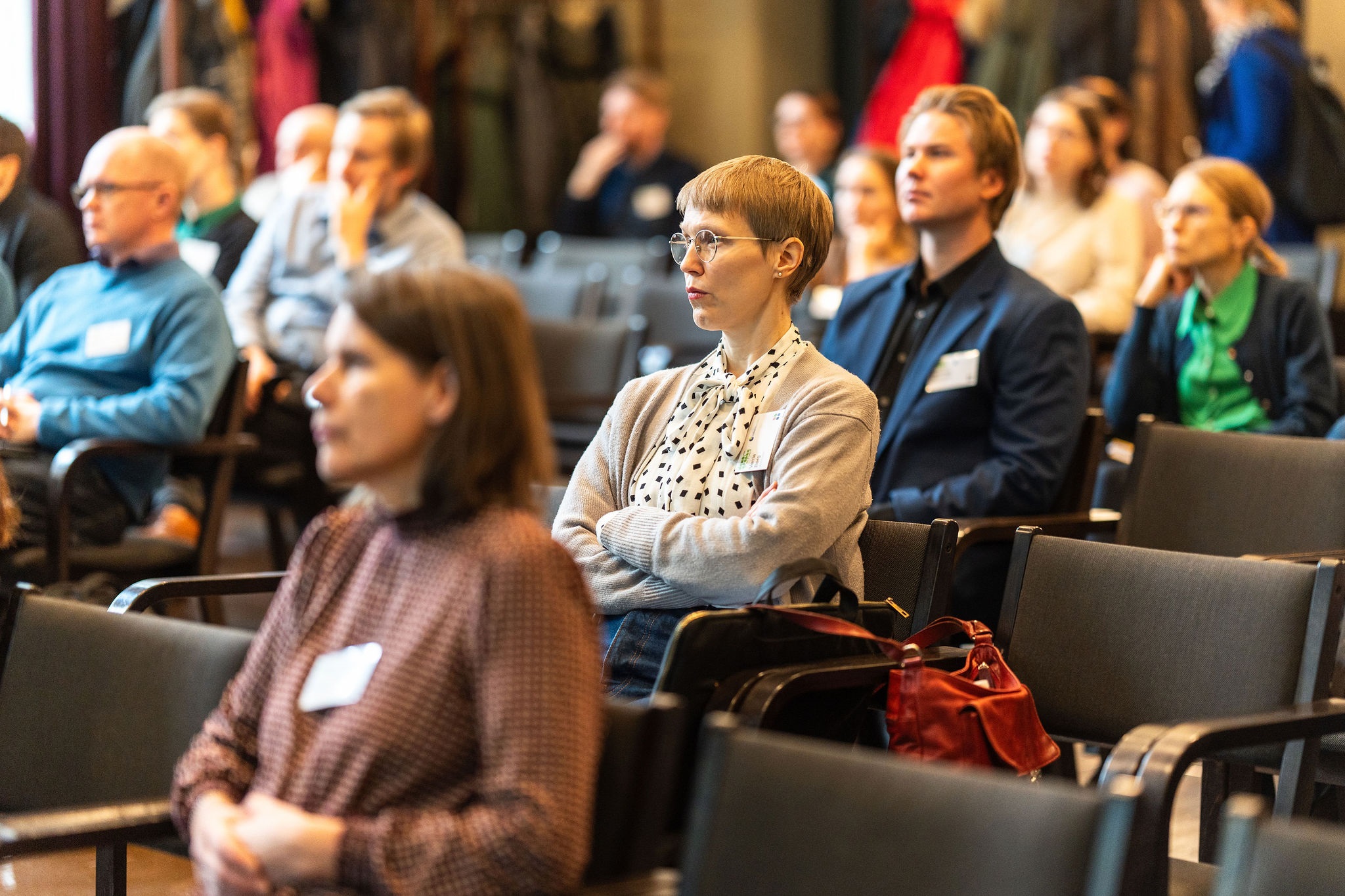 Finland’s population is ageing, birth rates are declining, and the number of people of working age is decreasing. Demographic development involves fundamental changes that have wide-ranging impacts on our society, economy, and people’s lives. The projects within the DEMOGRAPHY programme study how demographic changes are reshaping Finnish society and how these changes can be influenced and adapted to.
Photos: Sami Siilin